

In 1999, the world spent $300 billion fixing a computer bug that, in the end, didn’t cause any problems. Twenty-five years later, nobody can agree whether we prevented a disaster or panicked over nothing.
What Was the Y2K Bug?
In the 1960s, when computer memory was expensive, programmers saved space by storing years as two digits. 1965 became 65, 1973 became 73. The software wasn’t supposed to last that long, because nobody builds a system expecting it to still be running forty years later. But a lot of it was still running, and nobody had gone back to check what would happen when 99 rolled over to 00.
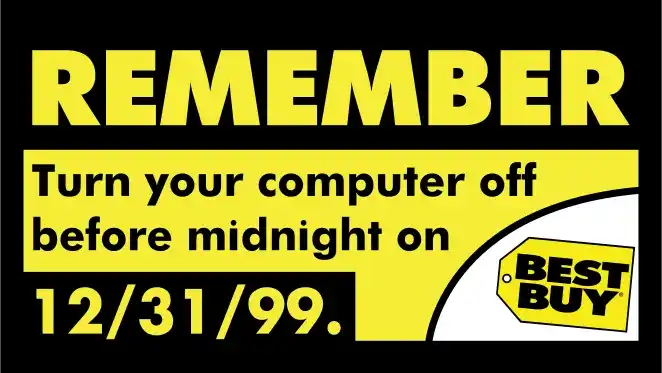
How Dangerous Was Y2K?
The estimates kept getting worse. The Gartner Group said it would cost $600 billion to fix everything, a figure that seemed less absurd once the Pentagon revealed it was spending $3.7 billion on its own systems alone. A Senate report warned that power failures were likely. And the bad code wasn’t only in mainframes; it had also made its way into embedded chips running hospital equipment, elevators, traffic lights. The people responsible for those systems mostly didn’t know if they had a problem or not.
The State Department put out bulletins warning that travelers in some countries might face utility or banking glitches. Not “don’t go,” just “be aware.”
Then there was the nuclear question. Russia’s missile warning systems were Soviet-era, and nobody knew what they’d do at the rollover. So on New Year’s Eve 1999, American and Russian officers sat together in the same room in Colorado, watching the same screens. Two countries that had spent fifty years pointing thousands of nuclear weapons at each other, sitting side by side because of how some programmers formatted dates in 1967.
On New Year’s Eve 1999, American and Russian officers sat together in the same room in Colorado, watching the same screens.
How COBOL Programmers Made a Comeback
For a brief window, COBOL programmers mattered again. COBOL was a programming language from 1959, and by the 90s, knowing it was like knowing how to shoe a horse. Quaint and unhireable. But banks still ran on it, government systems still ran on it, and someone had to crawl through millions of lines of ancient code hunting for two-digit years.
That’s how people who’d been invisible for a decade became suddenly essential. One programmer talked to Wired in 1998 about how he’d spent years getting passed over for younger hires before Y2K made everyone start calling. By January 2nd, the phones had stopped.
How Bad Was the Y2K Panic?
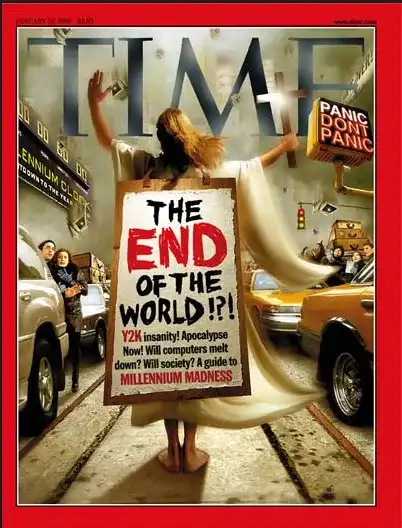
The anxiety spread across every level. A Deutsche Bank economist put the odds of recession at 70 percent, and one in five Americans said they planned to stockpile food. The media matched the mood. TIME ran “THE END OF THE WORLD!??” on its cover (question marks doing a lot of work there). The federal government wasn’t much calmer: the Fed set aside $50 billion in cash, and Clinton appointed John Koskinen to be Y2K czar, a job title that could exist, apparently.
By December, officials claimed 99 percent of federal mission-critical systems were fixed. Tech workers spent New Year’s Eve in server rooms while reporters staked out data centers like they were waiting for a verdict.
What Actually Happened on January 1, 2000
Midnight rolled through New Zealand, then Australia, then Asia, then Europe, and nothing happened in any of them.
By the time the ball dropped in Times Square, people had mostly stopped watching. A few days later, the Y2K czar told reporters the bug had been squashed. There were minor glitches: Pakistan’s stock exchange needed manual workarounds, a Japanese nuclear plant’s monitoring system briefly failed, and some websites displayed the year as 19100. Nothing major.
Was the $300 Billion Worth It?
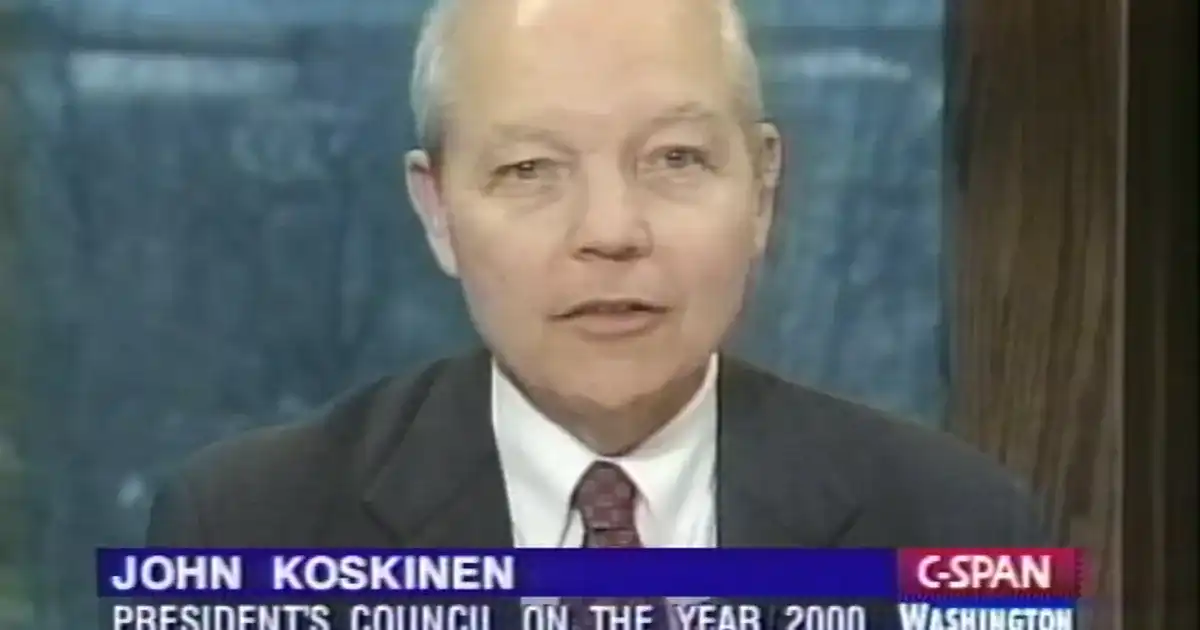
Almost immediately, people started asking whether the whole thing had been overblown. The czar said they were “victims of their own success,” because the smoother things went, the more it looked like the danger had been invented. Senator Bob Bennett asked critics whether they’d have preferred the New York Stock Exchange to have Pakistan’s problems.
But Italy had barely prepared and nothing happened there either, and the same was true of Russia and South Korea, possibly because those countries had less ancient mainframe infrastructure to begin with. Some of the problems that did occur were caused by the fixes themselves, like a Y2K patch that knocked out a spy satellite’s ground station for three days.
When Y2K remediation programs shut down almost overnight after January 1st, many concluded the whole thing had been overblown. In 2004, an economist named John Quiggin published a paper arguing that most of the $300 billion was wasted.
But that’s the problem with disaster prevention: success looks identical to overreaction. The whole point was to make sure nothing happened. And nothing happened.
So we’re left with an unanswerable question. Did we spend $300 billion averting catastrophe, or did we spend $300 billion on the most expensive insurance policy ever filed against a problem that was never really there?