

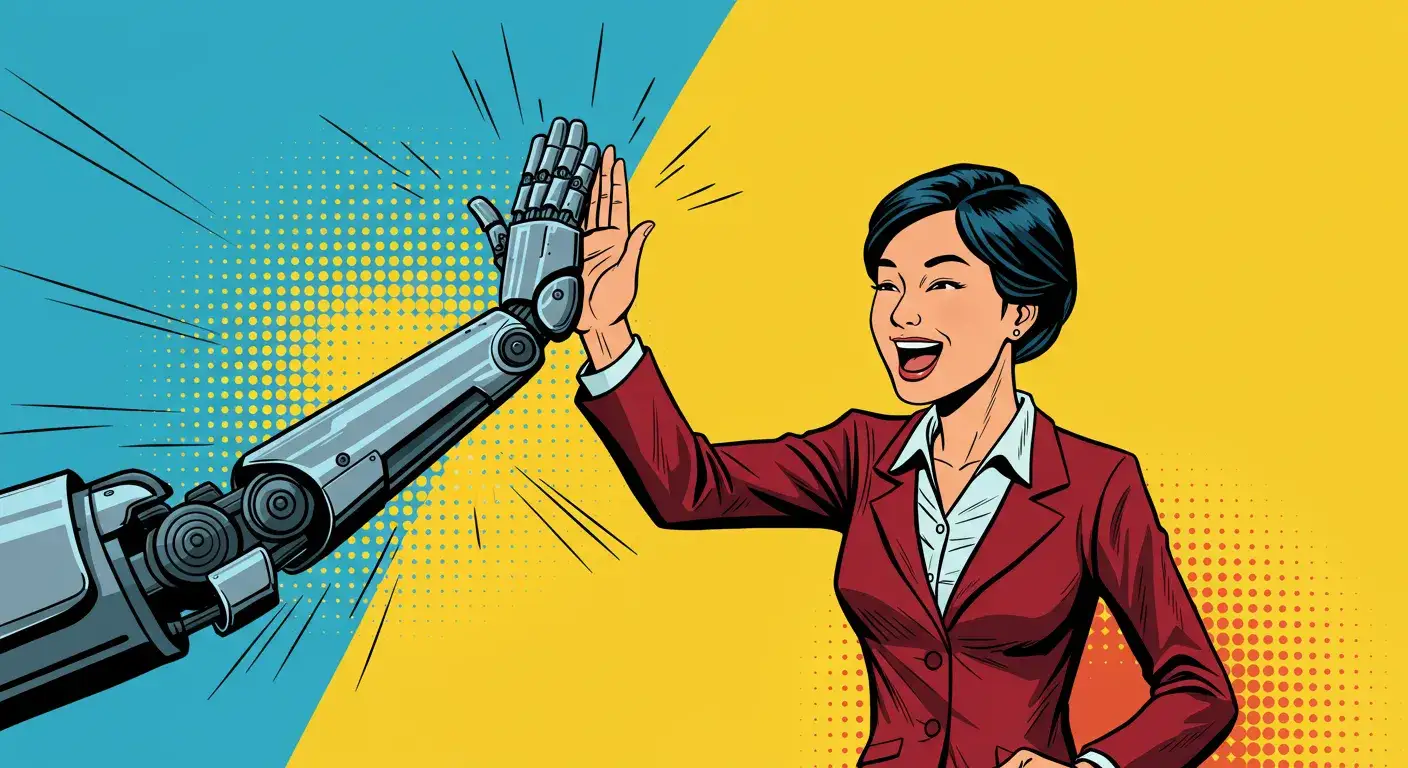
The conversation around AI and content seems to have split into two camps that don’t talk to each other.
On one side you have people warning about AI slop, which is a real thing. That particular flavor of text that sounds like it was written by someone who has never had an original thought, or maybe has never been outside. You know it when you see it.
On the other side you have people promising that AI will handle everything, that you can just plug it in and the content will flow. This is also a real thing people believe, and they are wrong, and the content they produce tends to prove it.
But this isn’t about which side is right. This is about small businesses who are stuck in the middle, producing nothing at all.
Anyone who has run a small business knows what the content treadmill looks like from the inside. You’re supposed to be writing blog posts and sending emails and posting on LinkedIn and updating your website and answering FAQs, and you’re also supposed to be doing the actual work your business does, and also payroll, and also that thing with the vendor. Big companies have people whose entire job is content. You have Tuesday afternoon, maybe, if nothing catches fire.
So the blog goes dark. Not because you have nothing to say, but because saying it keeps losing to everything else.
What interests me about AI tools is that they change this particular problem. Not the problem of what to say. The problem of getting it down.
There’s a specific thing that happens when you sit down to write and nothing comes. You know you should produce something, but the page stays blank, and so you check your email, and then there’s a meeting, and suddenly it’s been three months since your last post.
AI short-circuits this. You describe roughly what you’re trying to say and it gives you a draft to fight with. The draft is usually not good. But fighting with a bad draft turns out to be much easier than creating something from nothing. Most of the work, it turns out, is getting to the draft at all.
This is the sense in which AI levels the playing field. Not that it makes a three-person company as good at content as a company with a marketing department. It doesn’t. But it makes showing up possible in a way it wasn’t before.
The thing AI will not do, and cannot do, is know what you should say. It doesn’t know your customers. It doesn’t know why people actually hire you, or what makes you different from the competitors who use all the same words you do. It doesn’t know what you’ve noticed that nobody else has noticed. That stays yours. It has to.
The thing AI will not do, and cannot do, is know what you should say.
There’s a version of this where you hand everything to AI and it produces content that is technically competent and totally empty. The verbal equivalent of a stock photo. This happens constantly, and it’s what the slop-worriers are worried about, and they’re not wrong to worry. But the emptiness isn’t a property of the tool. It’s a property of how the tool gets used. Specifically, it’s what happens when you ask AI to do the thinking instead of just the drafting.
I’m reminded of the table saw. You could cut wood with a handsaw. People did, for a long time. But if you’re trying to build furniture and you have access to a table saw, using it doesn’t make you less of a craftsman. It just means you spend less time on the part that doesn’t require craft.
So, ask yourself: do I have something to say? If you do, these tools make it easier to say it.
If you don’t, they will expose that fact very quickly. Which might be useful information to remember.