
So there’s this thing that happens now. You make something and put it out there—could be anything, a piece of writing, a painting, whatever—and if it gets seen by enough people, a certain kind of response will eventually appear underneath it.
“Genuine question: did you actually create this?”
Or just the single word, “slop,” which is a term that didn’t even exist in this sense like two years ago but has already hardened into a kind of one-syllable dismissal that conveys: I know what you are.
The phrase “genuine question” is interesting because it has never once in the history of the internet preceded a genuine question.
Everybody knows this. The person typing it knows it. And yet they type it anyway, those two extra words, and I think the reason is that they want the accusation and the alibi both. They want to say you’re a fraud but they also want to seem like they’re just curious, just wondering, just asking an innocent question that you’re welcome to answer if you want.
The need for that cushion tells you everything. If you actually just wanted to know, you’d just ask.
But anyway, this is not a rant about how these people are bad. Or it might be, partly, but not wholly.
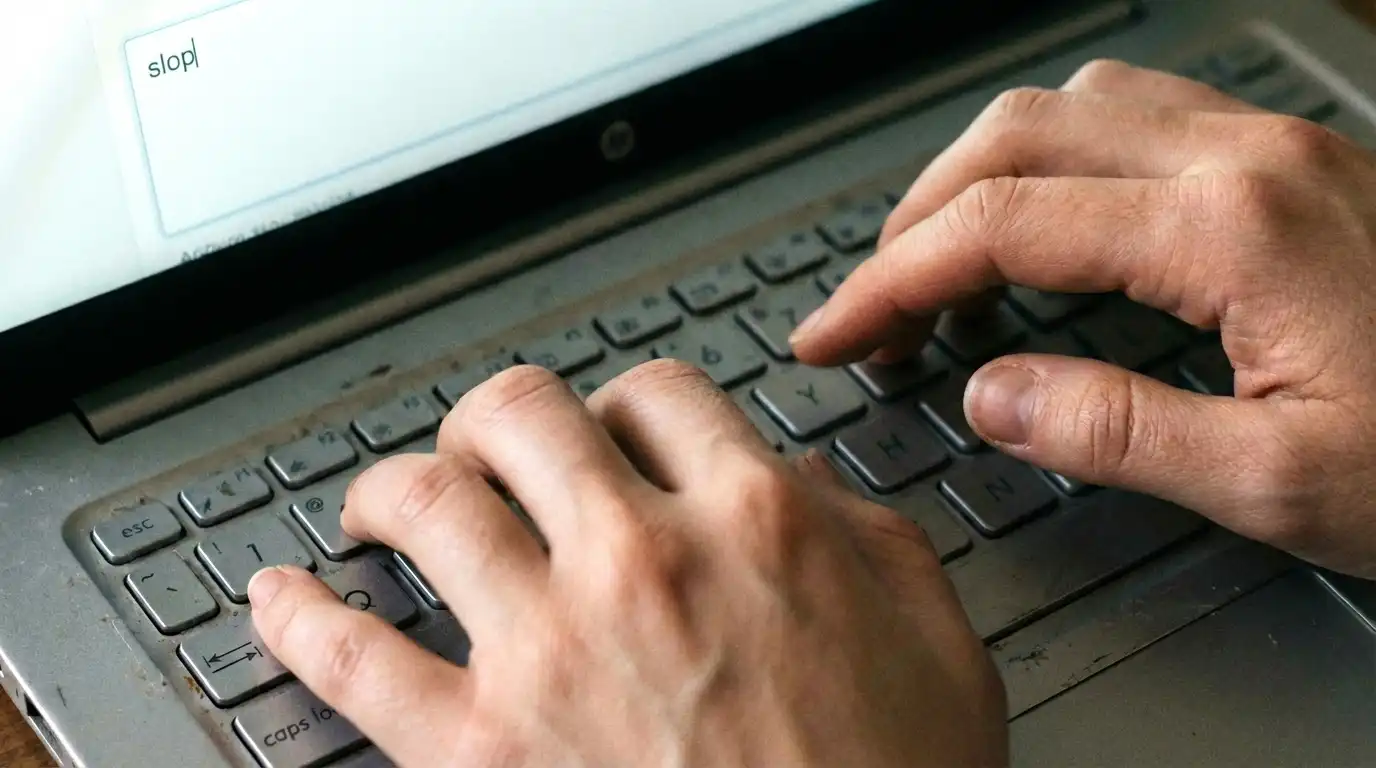
What I actually want to understand is what it feels like to be the person typing “slop” and hitting send. Because there’s something satisfying in it, right? You weren’t fooled. Everyone else apparently was, or at least they weren’t saying anything, and you saw through it. I’ve felt that about other things, probably. Not this specifically but the same sort of I-caught-it feeling.
Then you post it and you check back later. Or not even later, like ten minutes later. To see if anyone else noticed what you noticed, or if the person got defensive. And I think the checking back is the part that says the most, because why would you need to check back? The judgment should be its own reward if you really believed in it. But apparently it’s not.
These people don’t think they’re being cruel, is the thing. They think they’re performing a public service. The word “slop” is useful for this because it sounds like something contaminated, like hogs at a trough. If you go around pointing out slop you’re not being a jerk, you’re doing sanitation work. You’re keeping things separated that should be separate. Real from fake. And someone has to, apparently, since everyone else is apparently too gullible or too busy.
Okay, fine. But imagine spending your day like that. Everything you encounter online has to pass a test first. Before you can even ask yourself if you liked something you have to ask whether a person made it or a computer made it. That question first, always. And at some point, I think, you stop being someone who checks and you become someone whose whole thing is checking. It takes over.
Here’s what I think is actually happening, or at least part of it. A lot of these people have some identity investment in being good at something, like writing or making images or whatever. And now there are these machines that can produce a decent-enough version of that thing on demand. And if you spent years getting good the slow way, this is, I don’t know. Destabilizing doesn’t quite capture it. It’s more like the floor moved and you didn’t.
And I think the easiest response to that feeling is to turn it into a moral position. The discomfort gets reframed as ethics. First it’s “I don’t use AI,” and then that becomes part of who you are, and then it becomes a judgment on people who do. You end up with this whole structure you can live inside where you’re right and other people are cheaters. Which is way easier than just sitting with the uncomfortable feeling and not knowing what it means.
There’s another version too, the people who insist they aren’t threatened at all because the whole thing is garbage and the bubble is about to pop. These people suddenly talk like equity analysts. They are very concerned about return on investment, the sustainability of the business model, and the inevitable correction. Which is interesting coming from people who would normally rather die than sound like a finance guy. But it accomplishes the same thing as the moral position, I think. If it’s all going to collapse anyway then you don’t have to figure out what it means that it exists. You can just wait it out, and in the meantime you get to be the smart one who saw through the hype.
I’m not saying there’s nothing to the uncomfortable feeling, by the way. Something is strange about all this. Fluency used to take years and now it doesn’t, necessarily, and I don’t know what to make of that either.
But when you turn that strangeness into a full-time thing—when detection becomes like a hobby, or a skill you’re cultivating, except the only possible use for the skill is to accuse strangers—I don’t know. You had one bad feeling and now you have a different bad feeling and you’re also less pleasant to be around. That doesn’t seem like a good trade to me but maybe I’m missing something.
You had one bad feeling and now you have a different bad feeling and you’re also less pleasant to be around.
And it doesn’t do anything. The comment sits there. Maybe someone agrees with you. Maybe the person responds defensively and you get to feel more certain you were right. But nothing changes. The thing you caught stays caught and the next thing comes along and you catch that too and at some point you have to close the laptop, and what have you got? What have you actually got?
I was hoping to write something about these people that was funny and also not just mean for the sake of it. But I think the actual situation is sad. These are people who got scared by something and couldn’t figure out what to do with the fear, so they made it into a job. Scrolling, checking, judging, moving on. And the job has gotten so consuming that they probably don’t even feel scared anymore. They feel like the one person who sees what’s really going on.
And now I’ve written a thousand words about them, which is its own kind of thing, I guess.