The grammar is wrong, which is part of the point. “Don’t catch you slippin’ now.” Catch who? You, presumably. Don’t let them catch you. But the construction omits the agent, which makes it feel less like advice and more like a condition of existence, like a weather report, the way someone might say “it’s cold out” or “it’s raining again.” This is just the climate.
The phrase assumes you’re already in danger. It doesn’t tell you how to get out, because there is no out. It just tells you to keep moving, stay alert, watch your back while also watching the front while also, presumably, trying to live some kind of life in the whatever hours remain.
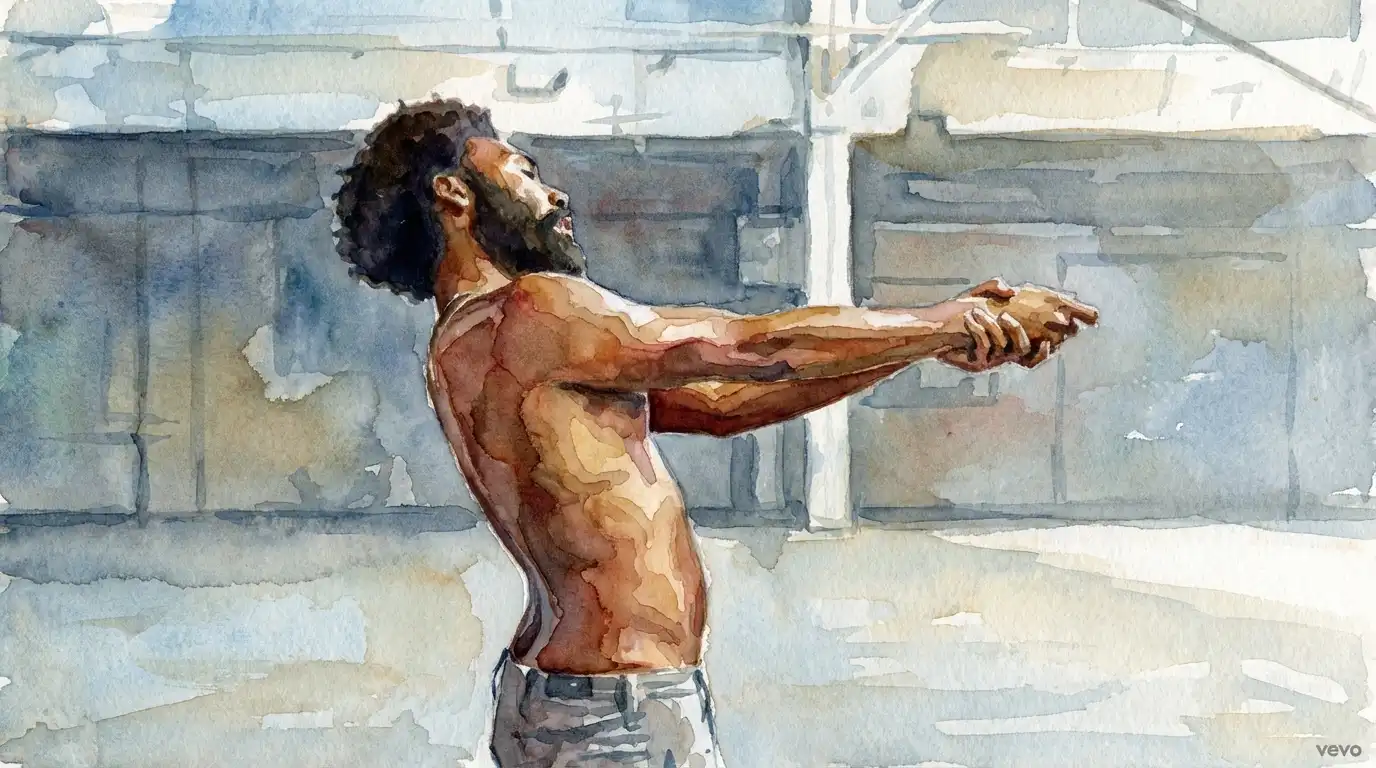
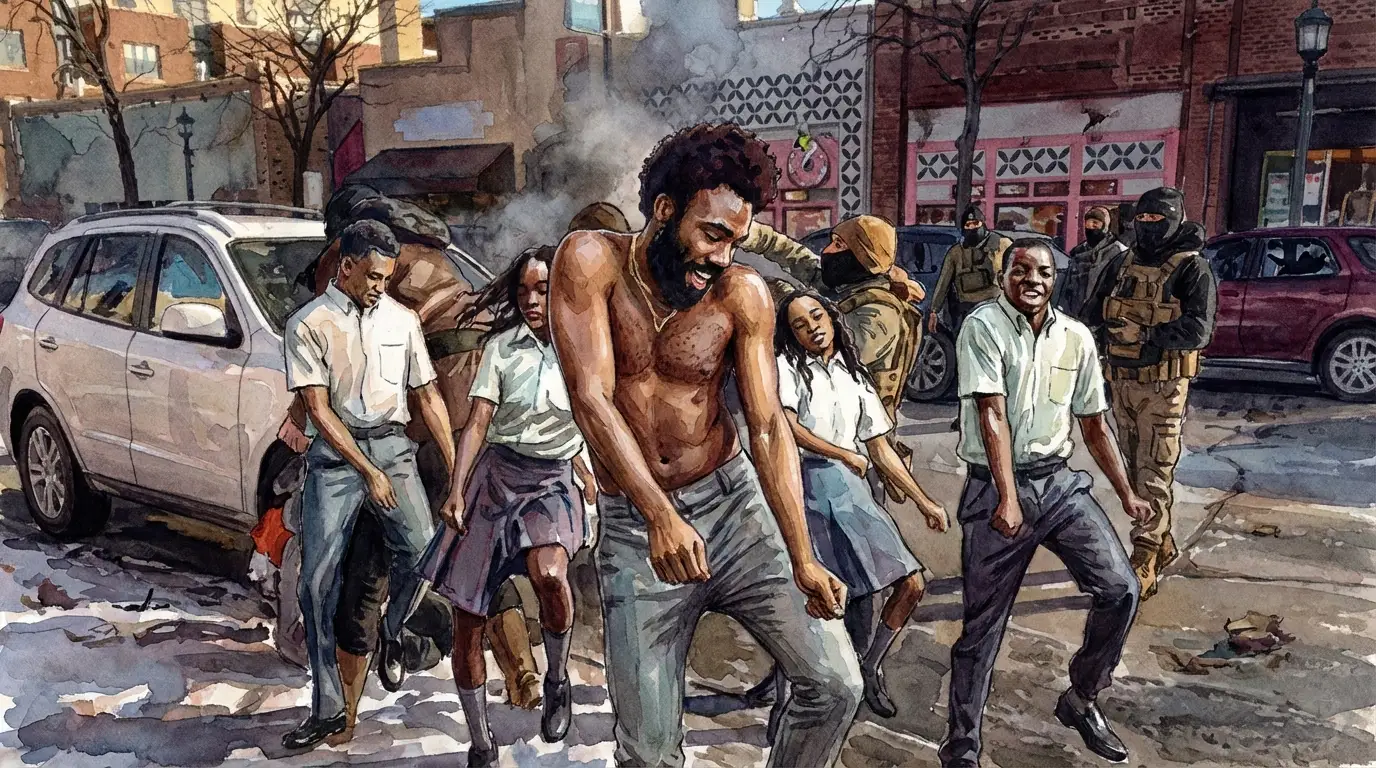
You’ve seen the music video. Donald Glover, as Childish Gambino, released it in May 2018, and for approximately seventy-two hours, it seemed like the most important four minutes of footage anyone had ever produced. It was analyzed, dissected, and freeze-framed. The Jim Crow pose. The choir massacre. The gun wrapped carefully in cloth while the bodies were dragged away like afterthoughts. It racked up five hundred million views (now almost a billion) and won four Grammys.
The video’s argument was not subtle. It’s worth stating plainly because plainness is part of the point: we are easily distracted, our distractions are entertaining, and while we are being entertained, people are dying. The entertainment and the dying are not separate phenomena but aspects of the same system. There is no outside position from which to observe this system that is not itself inside the system. And so the video, which you are now watching, which is entertaining you, which is distracting you, is also the thing it’s describing, which is either very clever or very grim or, most likely, both at once in a way that makes it hard to know what you’re supposed to do next.
And most of us didn’t know. We watched it. We understood it, or thought we did. Some made memes of Gambino dancing to “Call Me Maybe.” And I’m not criticizing that. What else were we going to do? You’re either dancing in the foreground or you’re one of the bodies in the back, and most of us are, at different moments of the day, both.
But the music video also seemed to be saying: Pay attention. Don’t get so caught up in the dance that you miss the fire, the horse, or the man being dragged. This is America.
Eight years later, on the morning of January 30, 2026, in what has turned out to be the world the video was describing: What happened to the people who took it seriously? What happened to the ones who refused to slip?
Some of them, it turns out, got caught anyway.
I’m thinking specifically of a 37-year-old ICU nurse named Alex Pretti, who, on the morning of January 24, was standing on a street in Minneapolis filming federal agents with his phone. He had come out because there had been, for several weeks, a federal operation in the city, with thousands of agents conducting immigration enforcement, and because, earlier in the month, a woman named Renée Good had been shot three times through her windshield while sitting in her Honda Pilot, her son’s stuffed animals visible in the glove compartment, and because, in the aftermath of that shooting, people in Minneapolis had started doing what people do when they feel like something is wrong: they came outside and they bore witness while holding up their phones. Pretti was one of these people. He was, by all accounts, paying attention.
When federal agents pushed a woman to the ground, Pretti stepped between them. For this he was pepper-sprayed, wrestled to the pavement, pinned by six agents, and shot ten times in less than five seconds.
The government called him a terrorist, an assassin, and later, perhaps, an insurrectionist. That last one because footage emerged from eleven days earlier, during a different incident, where he’d kicked out the taillight of an ICE vehicle. His “stock,” the President said, had “gone way down.”
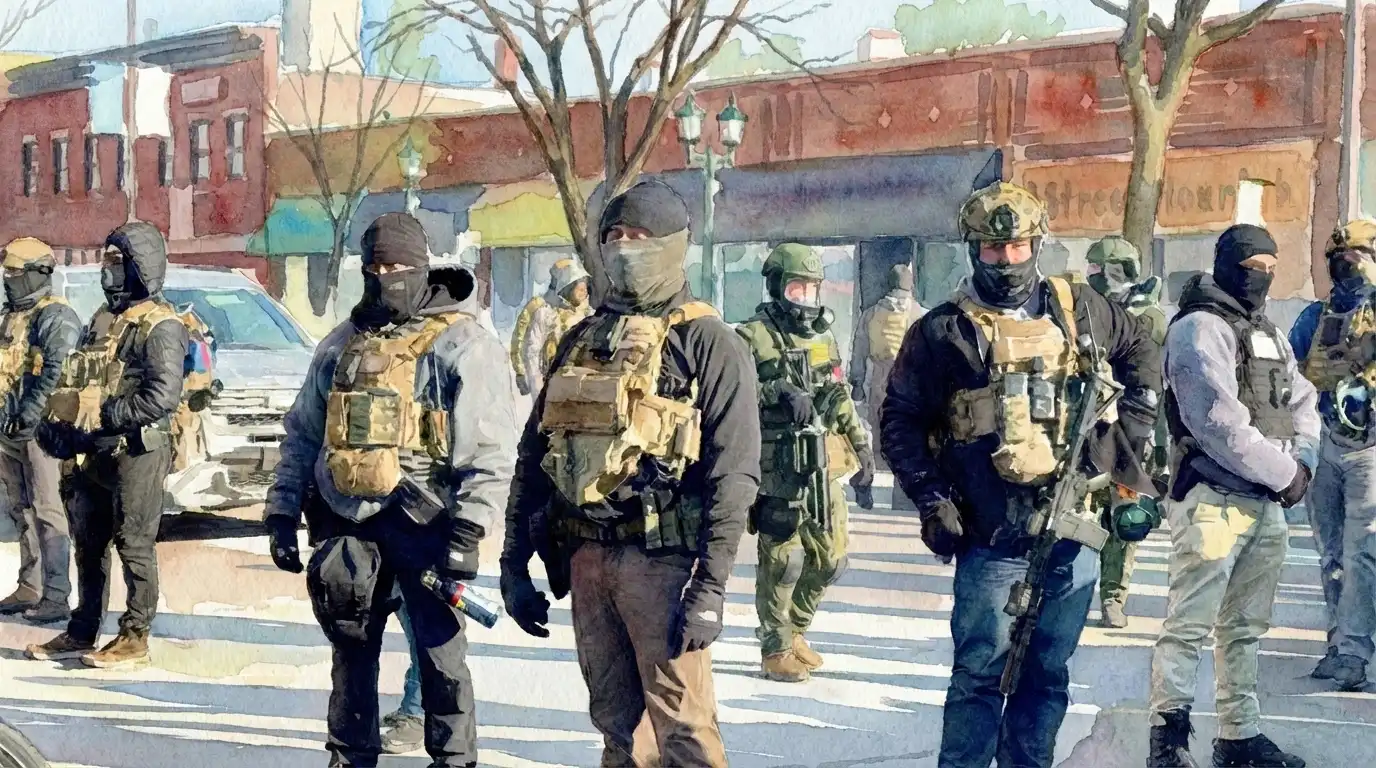
Are you noticing the loop? The video told us we’re distracted by entertainment while violence happens in the background. Some people took it seriously, stopped scrolling, and went outside. And then they became the violence happening in the background of someone else’s feed.
“Don’t catch you slippin’ now.”
It sounds like “pay attention and you’ll be safe.” But it means something closer to “pay attention and see how unsafe you are.”
Which is a strange thing to tell someone. It’s like saying: the house is on fire, and I want you to really notice that. Not to escape, because there is no escape, and not to put out the fire, because you don’t have a hose, but just to notice. To be present to it. To not pretend it isn’t happening.
Why would anyone want that?
I think the answer has something to do with the difference between being deceived and being complicit. If you don’t know the house is burning, you’re a victim. If you know and keep dancing anyway, you’re something else. And the video, along with a lot of other art that shows you the fire without handing you a hose, seems to be saying that it’s better to be the second thing than the first. It’s better to dance with your eyes open than closed. Better to be complicit than deceived, because at least complicity contains a choice, and where there’s a choice there’s a self, and where there’s a self there’s the possibility, however faint, of choosing differently.
It’s better to dance with your eyes open than closed.
This might be wrong. It might be a cope, a way of making the unbearable feel manageable by reframing it as a matter of perspective rather than power. But it also might be the only game in town. Because the alternative—refusing to know, letting the dance be just a dance—is its own kind of death, a death-in-life, the thing the video shows at the very end: Gambino running through the dark, eyes wide with terror, chased by something he can no longer outrun because he spent too long pretending it wasn’t there.
I should be clearer about what I think.
The honest answer is that I believe Pretti was right to stand there, even though it killed him. Not because it helped. It most likely didn’t. Not because it will change anything. It probably won’t. But because the alternative was to keep scrolling, keep dancing, and let the feed wash over him while someone else got pushed to the ground. He would have been safer, but he also would have been less himself. That’s the trade, and he was righteous to make it.